Thinking about replacing an HVAC unit before you list, or planning an electrical upgrade right after closing? In Conyers, pulling the right permits and passing inspections can save you time, protect your budget, and give buyers and lenders the clean paperwork they expect. You want clarity, not red tape. This guide shows you exactly when permits are needed, how inspections work, and how to keep records that support smooth due diligence.
Let’s dive in.
Start with jurisdiction
Before you do any work, confirm who governs your address. Properties inside the City of Conyers are handled by the City of Conyers Building and Inspections Department. Properties in unincorporated areas fall under Rockdale County Community Development and Building Inspections. Your jurisdiction determines permit rules, fees, forms, portals, and the inspection office.
To confirm your jurisdiction, check the Rockdale County tax assessor parcel search, the City of Conyers GIS or parcel map, or call the city or county building department. This quick step helps you pull the right permits and find historic permit records.
Georgia uses state minimum building codes based on model codes, and local jurisdictions adopt specific editions and may add local amendments. Always verify the current code edition and any local amendments with the city or county that will issue your permit.
When you need a permit
General rule: a permit is required for work that alters, replaces, extends, relocates, or materially changes capacity. Routine maintenance and minor like-for-like repairs are often exempt, but definitions vary by jurisdiction. If in doubt, ask the building department that covers your address.
Mechanical HVAC
Work that typically requires a permit:
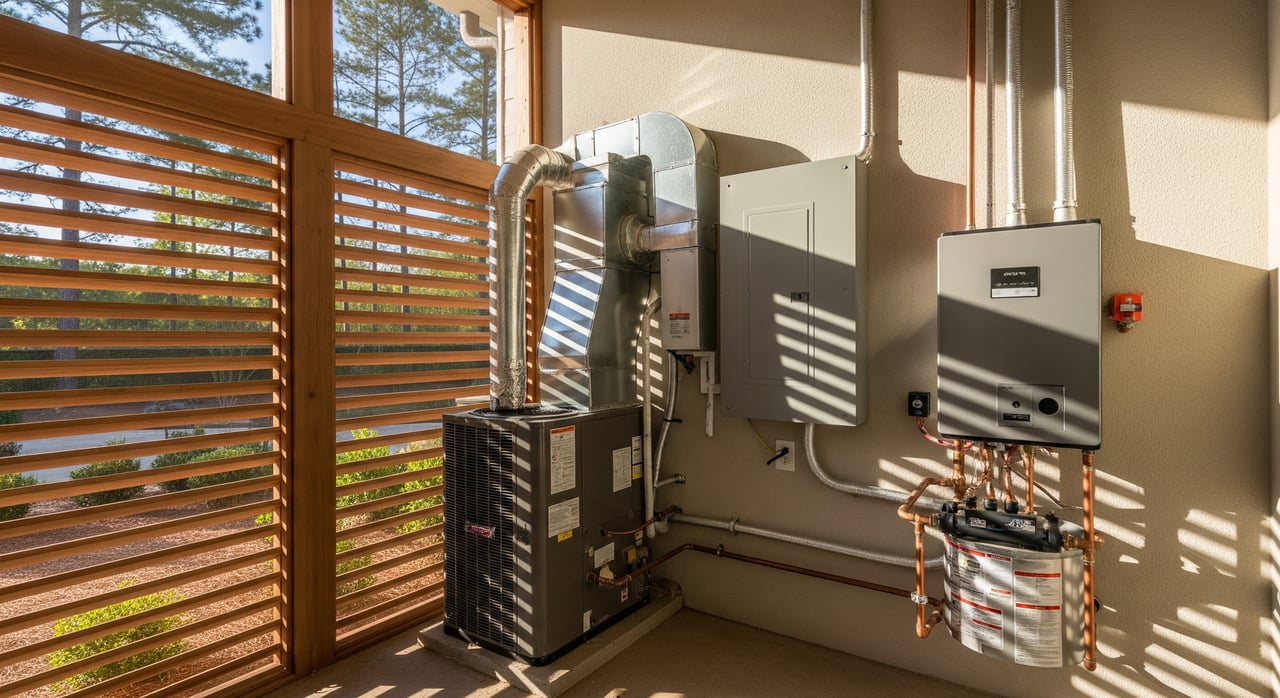
- Installing a new HVAC system, such as a furnace, condenser, heat pump, or mini split.
- Replacing an existing unit when capacity or tonnage changes, or when ducts are altered.
- Installing or extending ductwork that supplies conditioned air.
- Installing fuel-burning appliances or related venting and chimneys.
- Adding mechanical ventilation or commercial-grade equipment.
Common exemptions to verify locally:
- Routine service and minor repairs, such as a capacitor swap or refrigerant charge.
- Like-for-like equipment replacement with identical capacity is sometimes exempt, but many jurisdictions still require a permit. Confirm before you schedule the install.
Licensing reminder: many local rules require a licensed HVAC contractor to pull the permit. Technicians must follow EPA refrigerant rules, and the building department will still expect permits and equipment specs.
Electrical
Work that typically requires a permit:
- New electrical service installation or a service upgrade, for example from 100 amps to 200 amps.
- Replacing a meter base or changing service disconnects.
- Adding new circuits, subpanels, or significant rewiring in walls.
- Installing hardwired EV chargers, standby generators, or transfer switches.
- Any rough wiring before walls are closed.
Common exemptions to verify locally:
- Replacing receptacles, switches, and light fixtures is often considered minor maintenance.
- Portable, plug-in EV chargers may be exempt from building permits, but load and local rules can trigger an electrical permit or inspection.
Plan for utility coordination on service upgrades. The utility may have its own meter or service steps in addition to the building department inspection. Electrical work usually must be done by a licensed electrician.
Plumbing
Work that typically requires a permit:
- Installing or replacing water heaters, especially gas-fired units.
- Replacing or relocating fixtures when drain or vent changes are involved.
- Re-piping, partial or whole-house, or adding new supply or drain lines.
- Installing or modifying sewer laterals, septic systems, or grease traps.
Common exemptions to verify locally:
- Minor like-for-like fixture swaps that do not alter drains or venting.
Sewer and septic notes:
- If you connect to municipal sewer, the utility may require its own connection permit and inspection.
- Septic work requires county health or environmental permits and inspections through the county.
Plumbing permits often require a licensed plumber for issuance and final sign-off.
Special situations and emergencies
- Historic districts: If the home is in or near Olde Town or another designated area, exterior mechanical equipment or new penetrations may need historic review in addition to building permits.
- Gas piping: New or modified gas lines usually require a permit, pressure testing, and may need gas utility notification.
- Emergency repairs: You can often stabilize hazards immediately, but you still need to pull an after-the-fact permit and schedule inspections.
How inspections work
Inspection sequence
- Rough inspections: Before walls or ceilings are closed, inspectors check electrical rough wiring, plumbing drains and vents with required tests, and mechanical duct routes and equipment placement.
- Testing inspections: Pressure tests for gas or water lines, backflow device checks, and other code-required testing.
- Final inspections: After the system is complete and operating, the final confirms code compliance and closes the permit.
- Special inspections: Meter base or service inspections that may involve the utility, appliance connection checks, or third-party verifications where required.
If an inspection fails, the inspector issues a correction list that references code sections. You schedule a re-inspection after corrections are made.
Scheduling and timing
You or your contractor schedule inspections with the same jurisdiction that issued the permit. Most offices accept requests through an online portal, by phone, or through email based on the permit system.
- Lead time: Plan 24 to 48 business hours for routine inspections. In busy seasons, allow 3 to 5 business days.
- Response time: Many projects see inspectors within 1 to 3 business days. Specialty inspections may take longer.
- Re-inspections: Similar timing applies, but verify if re-inspection fees must be paid first.
If an inspection fails
Common reasons include unsealed penetrations, incorrect wiring or grounding, inadequate clearances, wrong materials, missing documentation such as manufacturer specs or load calculations, and lack of required test results. After you correct items, you request a re-inspection. Many jurisdictions charge re-inspection fees after the first failure, so plan accordingly.
What inspectors record
Inspectors document pass or fail results, comments, date, time, and the permit number. When you pass the final, you receive a signed final release or certificate of completion. This is the document buyers, lenders, and insurers look for in due diligence.
Keep clean records for due diligence
What buyers, lenders, and insurers check
- Permit history that shows the work was permitted and finaled, including the permit number and dates.
- Final inspection reports or a certificate of completion for major system work.
- Manufacturer manuals, warranties, and service invoices that show professional installation.
- For sewer or septic work, approvals from the utility or county environmental health.
How sellers organize a permit packet
- Download or print the permit page and final inspection log from the issuing jurisdiction’s portal.
- Keep contractor invoices, scope of work, license and insurance proof, and equipment model and serial documentation.
- Assemble warranties and manuals in one folder or digital file.
- List the permitted improvements and completion dates in your disclosure packet.
How buyers verify and plan
- Request the permit history early in due diligence so there is time to resolve gaps.
- Ask for finaled permits for recent system work, or use contingencies if anything is pending.
- If you plan upgrades right after closing, confirm permitting needs with the local building department before you schedule contractors.
Dealing with unpermitted work
After-the-fact permits
If you or a previous owner completed work without a permit, many jurisdictions allow you to apply for a permit after the fact. The inspector will review the work, which may require partial openings for rough checks, and issue correction items if needed.
Risks, costs, and timing
Retroactive permits can lead to remediation, rework, civil fines, and multiple inspections. Underwriting or insurance decisions can be delayed until permits are closed. Depending on scope and inspector schedules, plan on weeks to months to resolve.
Disclosure and negotiation
Sellers should disclose known unpermitted work to reduce risk. Buyers should run a permit search and address unpermitted items during due diligence. You can request after-the-fact permits, required corrections, or credits based on contractor estimates.
Timelines and checklists
Seller timeline before listing
- Step 0: Confirm jurisdiction, city or county.
- Step 1: Define scope, replacement, upgrade, or relocation. Call the building department to confirm permit requirements.
- Step 2: Hire a licensed contractor and have them pull the permit. Make sure the permit number appears on proposals and invoices.
- Step 3: Schedule the work with room for inspections and corrections.
- Permit issuance: same day to 2 weeks, based on review needs.
- Inspections: 1 to 7 business days per inspection in typical conditions.
- Major work span: plan 4 to 6 weeks from start to final sign-off. Allow more time for historic review or septic work.
- Step 4: Save copies of permits, inspection results, final sign-offs, and equipment paperwork. Include these in your listing packet.
Buyer timeline for post-closing work
- Step 0: Pull permit history during due diligence to learn what was permitted and what was not.
- Step 1: Confirm whether the seller will deliver finaled permits or if any after-the-fact permits are pending.
- Step 2: Share your planned scope with the local building department to confirm permits, tests, and any restrictions.
- Step 3: Schedule contractors. Allow 1 to 3 weeks to secure a contractor and permit for routine replacements. Plan 4 to 8 or more weeks for service upgrades or septic work.
- Step 4: Keep copies of permits and final inspection documents. Lenders may ask for finaled permits when you apply for certain financing.
Seller packet checklist
- Permit numbers and copies, both issued and finaled, for HVAC, electrical, plumbing, and any structural work.
- Final inspection reports or the certificate of completion.
- Contractor name, license number, insurance proof, and final invoice.
- Equipment make, model, serial numbers, and warranty details.
- Utility coordination letters for electric service changes, sewer connections, or septic permits.
Official contacts to check
Confirm specifics with the right authority for your property address.
- City of Conyers Building Inspections or Community Development for properties inside city limits.
- Rockdale County Community Development and Building Inspections, and Environmental Health for unincorporated areas and septic.
- Georgia Department of Community Affairs for adopted state code editions.
- Georgia licensing boards or Secretary of State to verify contractor licenses and disciplinary history.
- Local utilities for meter, service, gas, and sewer coordination.
- Local historic preservation commission if the property is in a designated historic district.
Work with a local guide
Permitting can feel technical, but a clear plan keeps your project on schedule and your sale or purchase on track. Whether you are updating systems before listing or planning upgrades right after closing, we can help you confirm jurisdiction, coordinate due diligence, and align timelines so your permits and finals land before important milestones.
Ready to map out your permits, inspections, and records? Contact LBBM Brokers at georgiahomes.realestate to Schedule a Free Consultation.
FAQs
Do Conyers homeowners pull permits or do contractors do it?
- Many jurisdictions require the licensed contractor to pull trade permits. Ask your contractor to obtain the permit and provide the permit number on your paperwork.
When is a permit required for replacing an HVAC unit?
- New systems, capacity changes, duct alterations, or fuel-burning equipment usually require a permit. Like-for-like swaps may still need one. Confirm with the city or county.
What inspections should I expect for an electrical service upgrade?
- Expect a rough or service inspection, possible utility coordination for the meter, and a final inspection to close the permit once everything is complete.
Are water heater replacements always permitted in Rockdale County?
- Water heater replacements, especially gas units, typically require a plumbing permit and a final inspection. Verify with your permitting office before scheduling work.
How long does it take to close a permit in busy seasons?
- Routine inspections can be 1 to 3 business days out, but allow extra time during peak seasons. Build in 4 to 6 weeks for larger projects to reach final sign-off.
What should buyers request during due diligence regarding permits?
- Ask for permit history, finaled permits for recent system work, contractor documentation, and any utility approvals. Use contingencies if permits are pending or missing.